

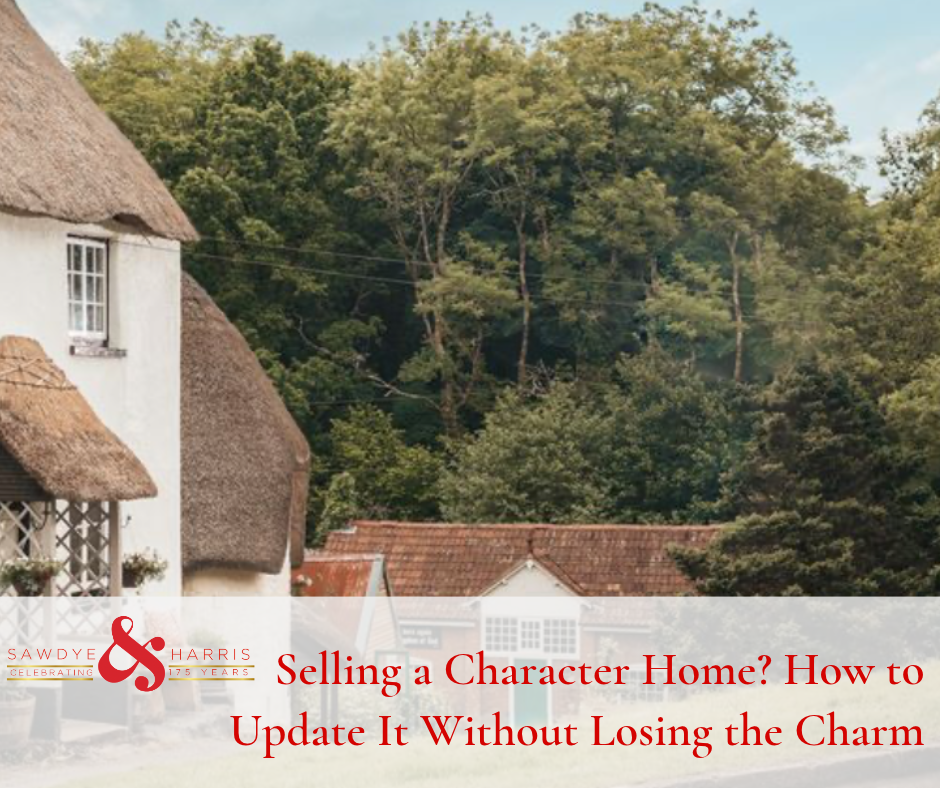
Selling a Character Home? How to Update It Without Losing the Charm
Character homes rarely stay on the market for long. Buyers are drawn to the beams, the fireplaces, the uneven floors and all the little details that a new build simply can’t offer. If you are thinking of selling a period property, this also means thinking carefully about what to update before you list it, because the wrong changes can quietly strip out the very thing buyers are paying for.
We’ve seen plenty of character homes go to market across Devon, and the sellers who do best are the ones who update with the house rather than against it. Here’s what to keep in mind.
Start with what buyers fall for
Before you touch anything, walk through your home and note what gives it personality. Original beams, cast iron fireplaces, flagstone floors, panelled doors, exposed brick and old joinery are often the first things buyers mention on a viewing. Even small, inexpensive details like a cottage latch or an old bell pull can add to the sense that a property has a story behind it. These features cost nothing to keep and a great deal to replace, so build your update plan around protecting them rather than covering them up.
If a feature has seen better days, repair is almost always the better choice over replacement. A skilled local tradesperson can often restore an original window frame or a worn staircase for a fraction of what a full replacement would cost, and the result will usually look more convincing to a buyer than something new trying to look old.
Warmer without the compromise
A cold, draughty home puts buyers off fast, but modern insulation doesn’t have to mean losing the character. Draught-proofing doors and windows is cheap, quick and reversible, and it’s often the single biggest improvement you can make before a viewing season begins. Secondary glazing can cut heat loss while leaving original windows in place, and roof insulation is usually straightforward wherever the loft space allows it.
Historic England’s advice on energy efficiency in older homes is a useful starting point if you want to understand what’s appropriate for your type of property before you commit to any work. It’s worth getting this right early, since buyers increasingly ask about running costs alongside the character of a home.
Kitchens and bathrooms that suit the house
Buyers want modern comfort, but a kitchen or bathroom that feels bolted onto a period property can look out of place rather than aspirational. Simple cabinetry, natural materials and fittings that echo the age of the house tend to perform better with buyers than anything too sleek or contemporary. If you’re planning a refit before selling, keep the scale and style in proportion with the rest of the home, and resist the urge to open up every wall in search of an open-plan layout that the building was never designed for.
First impressions from the lane
Kerb appeal matters just as much for a character home as any other, and the exterior is often where buyers form their first opinion before they’ve even reached the front door. Original windows, doorsand brickwork are worth preserving wherever they’re sound, and small repairs such as repointing or repainting can make a bigger difference than a full replacement.
A garage or outbuilding is also part of this picture, and it’s an area that’s easy to overlook. A garage door is usually one of the largest visible features on a frontage, so one that feels too modern or doesn’t match the proportions of the house can undo a lot of the work you’ve put into the rest of the exterior. A guide to choosing a garage door that suits a period property sets out the styles and finishes worth weighing up before you replace one. Wessex Garage Doors explain that side hinged doors are often the strongest option for cottages and character properties, since they keep a traditional look while still offering a practical, everyday door for storage or parking, and that colour and finish usually matter as much as the door style itself when it comes to blending in with the rest of the house.
Check before you change
Many character homes sit within a conservation area, a National Park or have listed status, and this can affect what you’re allowed to change before putting the house on the market. Permitteddevelopment rights often don’t apply to listed buildings, and some alterations in a conservation area need permission even when the same change would be straightforward anywhere else. Removing or altering a historic feature without the right consent can create problems during a sale, so it’s always worth checking with the relevant authority before starting work.
For sellers in our own patch, Dartmoor National Park Authority’s planning guidance sets out what does and doesn’t need consent, and it’s a good first stop if you’re unsure where your property stands.
Know what your home is worth
Whether you’re in Ashburton, Chudleigh, Moretonhampstead or anywhere else across Devon, getting the right updates in place before you sell can make a real difference to how quickly your character home finds a buyer and the price it achieves. If you’re starting to think about a move, we’d be delighted to help. Book a free valuation and we’ll talk you through the best next steps for your property.